Can AI Agents Make Mistakes? The Honest 2026 Answer
Can AI agents make mistakes?
That is the first question every tradesman asks me after watching an AI agent quote a job.
Watch the video tutorial below, then I will show you exactly where agents go wrong and how I stop it.
Because this is the question that separates the businesses that win with AI from the ones that get burned by it.
I have built and run these systems for real clients.
Since 2024 I have sent 289 automated emails, run 8 agents and 20 cron jobs, and automated every repetitive task in my own business.
So this is not a theory article.
This is what happens when real quotes, real customers and real money flow through AI every single day.
Here is the honest answer to whether AI agents make mistakes, and what you must do about it.
Can AI Agents Make Mistakes — Table Of Contents
- Can AI Agents Make Mistakes? Yes — And Here Is What Actually Breaks
- Can AI Agents Make Mistakes — The 4 Ways It Goes Wrong
- Can AI Agents Make Mistakes — Why It Happens (The Research)
- Can AI Agents Make Mistakes — How To Stop Them
- Can AI Agents Make Mistakes — What I Do On Every Build
- Can AI Agents Make Mistakes — FAQ
- Can AI Agents Make Mistakes — The Bottom Line

Can AI Agents Make Mistakes? Yes — And Here Is What Actually Breaks
Yes, AI agents make mistakes.
Anyone who tells you otherwise is selling you something.
In 2026, agents are still powered by large language models, and those models still hallucinate.
They generate statistically likely output, not verified truth.
That is not a knock on the technology.
It is a fact you have to design around, the same way you design around rain on a building site.
The dangerous part is not the mistake itself.
It is that agents do not just answer questions — they take action.
They send emails.
They move money.
They book jobs.
So a small reasoning error becomes a real-world consequence before anyone notices.
One Reddit thread in r/AI_Agents summed it up perfectly.
Someone's agent made up a price and sent it to a client before the owner could catch it.
That is the nightmare scenario, and it is not rare.
Another thread in r/smallbusiness asked who is responsible when an agent sends the wrong quote, deletes customer data, or shares an internal document with the wrong person.
The uncomfortable truth is that the business owner still carries the cost and the reputation damage.
So yes, AI agents make mistakes.
But here is the part nobody tells you.
The mistakes are predictable, and they are preventable.
Every failure I have seen in production falls into one of four buckets.
Can AI Agents Make Mistakes — The 4 Ways It Goes Wrong
After building and running these systems for years, I can tell you the mistakes cluster into four groups.
Learn these and you will spot a problem before it costs you a job.
And when you are ready to stop worrying about agent mistakes for good, the ready-built agents in the AI Suite store already have these guardrails baked in.
1. It makes things up (hallucination)
The agent invents a fact, a price, a product spec, or a policy that does not exist.
Google Cloud describes AI hallucinations as incorrect or misleading results the model generates, often because of insufficient training data, wrong assumptions, or bias in the data.
For a tradesman this looks like the agent quoting £450 for a job you normally charge £300 for.
Or promising a warranty that does not exist.
Or telling a customer you cover an area you have never worked in.
This is the most common mistake, and the most fixable.
2. It loses the plot (context drift)
The agent forgets what the customer asked at the start of the conversation.
It contradicts itself two messages later.
It answers a different question than the one asked.
Most AI agent failures are about poor context management, not model quality.
If your agent handles a 40-message thread about a complex job, this is where it slips.
3. It picks the wrong tool or wrong data
Agents connect to your calendar, your inbox, your CRM, your price list.
Sometimes it books the wrong date.
Sometimes it emails the wrong customer.
Sometimes it acts on an old price list because that is the data it was given.
A Reddit user who builds agents for businesses said the first things to break are the handoffs, the source data getting messy, and exception handling — not the happy path.
Garbage data in, garbage actions out.
4. It claims success when it failed
The agent says the job is done when it is not.
It marks the email as sent when the send failed.
It confirms the booking when the calendar invite never went out.
This is the sneakiest mistake because nothing looks wrong on the surface.
You only find out when the customer does not show up.
Those are the four ways AI agents make mistakes.
Now let us look at why it happens, because the research explains everything.
Can AI Agents Make Mistakes — Why It Happens (The Research)
The research is clear, and it is worth reading carefully.
Because it tells you exactly what to expect from an agent — and how to design around it.
First, the big one from Stanford and Carnegie Mellon, cited by Forbes contributor Bernard Marr in January 2026.
Hybrid teams of humans working alongside agents outperform fully autonomous agentic AI 68.7% of the time.
Read that again.
Fully autonomous agents — no human in the loop — lose to human-plus-agent teams more than two thirds of the time.
That is not an argument against AI.
It is an argument for guardrails.
Second, the data quality problem.
Gartner predicts 60% of enterprise AI projects started in 2026 will be abandoned because the data is not AI-ready.
Agents cannot be smarter than the data you feed them.
If your price list, your services and your policies live in a spreadsheet on your laptop, the agent does not know them.
Third, the cost of getting it wrong.
An industry analysis from Business+AI reports that roughly 88% of enterprise agents that work in controlled demos fail when deployed to real workflows.
The same analysis puts the average direct cost of a failed AI agent project at $340,000.
And Galileo, now part of Cisco, lists hallucination and factual inaccuracy as the number one reason agents fail — the agent generates plausible-sounding but factually incorrect information by filling knowledge gaps with convincing fabrications.
Here is the point I want you to take away.
AI agents make mistakes for four reasons: they guess instead of checking, they lose context, they act on bad data, and they overclaim success.
Every single one of those is fixable with good setup.
None of them requires you to be a programmer.
If you would rather buy an agent that already has the guardrails fitted, that is exactly what the AI Suite store sells.
Now let me show you how to stop it.
Can AI Agents Make Mistakes — How To Stop Them
There are five guardrails that stop almost every mistake I have ever seen.
Apply all five and your agent becomes a reliable team member instead of a liability.
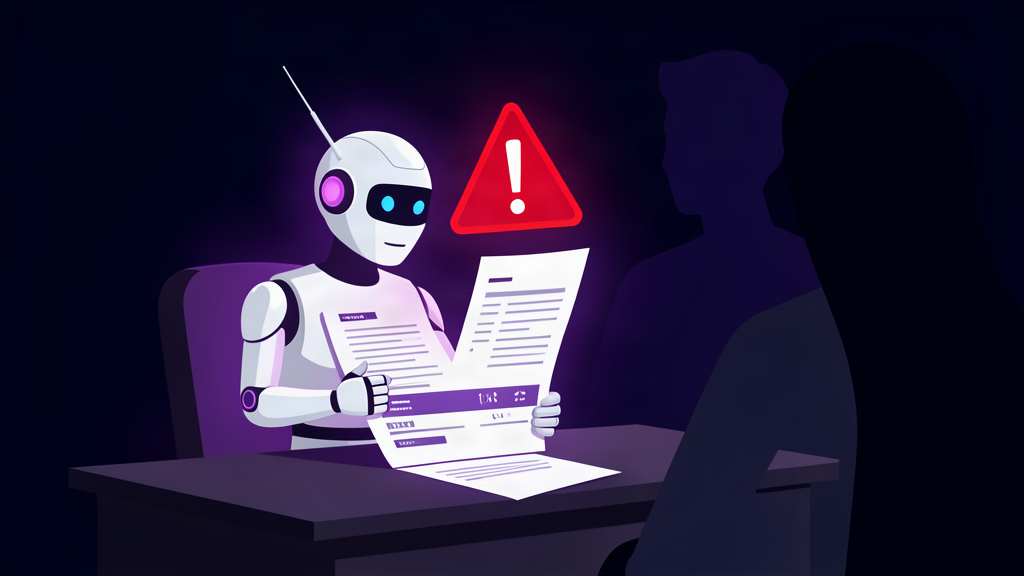
- Scope it to one job — an agent that does one thing well beats an agent that does ten things badly.
- Ground it in your real data — give it your actual price list, services, policies and opening hours, not general knowledge.
- Write explicit rules — tell it exactly what it can and cannot do with money, pricing and customer contact.
- Add a human checkpoint — anything risky gets sent to you for approval before it goes out.
- Review the logs weekly — spend ten minutes a week reading what the agent actually did.
Let me unpack the two that matter most.
Grounding is everything.
Google Cloud says the fix for hallucinations is to train the model on relevant, specific sources and limit possible outcomes.
Galileo says the most effective prevention is to ground the agent in verified information sources rather than relying on its training data — and to train agents to say "I do not have that information" instead of fabricating an answer.
In plain English: give the agent your real price book, and lock the price fields so it cannot guess.
The human checkpoint is the second big one.
That Stanford and Carnegie Mellon number — hybrid teams winning 68.7% of the time — exists for one reason.
A human catches the edge case the agent was never trained on.
So my rule is simple.
Automate the repetitive 80%.
Keep a human on the risky 20%.
Quotes above a set amount require your thumbprint.
That one rule prevents the most expensive mistake an agent can make — inventing a price and sending it to a customer.
Ready-built agents with that rule pre-fitted are in the AI Suite store.
Can AI Agents Make Mistakes — What I Do On Every Build
Now let me get specific, because this is what actually works.
When I build an agent for a client, I do not hope it behaves.
I build the behaviour in from day one.
Here is the setup that has stopped AI agents making mistakes in real deployments.
Step one: the agent gets a loaded knowledge base with the client's real prices, services, service areas, policies and tone of voice.
Step two: I write explicit rules for money and customer contact — what the agent can quote without permission, and what always goes to a human.
Step three: I add a human approval step for anything risky.
Step four: every action is logged, so the client can see exactly what the agent said, to who, and when.
Step five: we review the logs together weekly and tighten the rules.
That is it.
No PhD required.
No prompt engineering magic.
Just the same discipline you would apply to any employee you trust with your customers.
And the results speak for themselves.
A heating engineer in Stockport started with a single agent and took more bookings in his first week than he expected in a month.
An electrician in Leeds filled his diary with new jobs within weeks of turning on automated follow-ups.
None of those businesses needed to understand how the model works.
They just needed the guardrails in place.
If you want this built for you rather than doing it yourself, that is exactly what the AI Suite store is for.
Or start with the free AI setup checklist and see every guardrail laid out step by step.
Can AI Agents Make Mistakes — FAQ
Can AI agents make mistakes?
Yes, AI agents make mistakes — and in 2026 they still do it regularly. They hallucinate facts, invent prices, choose the wrong tool, ignore business rules and even claim a job is done when it is not. The honest answer is that every agent can make mistakes; the real question is how many mistakes your setup lets through, and whether a human checks the important output before it reaches a customer.
What kind of mistakes do AI agents make?
The common ones are fabricated prices or quotes, made-up product facts, wrong follow-up timing, sending a message to the wrong customer, booking the wrong date, and claiming a task is complete when it is not. Reddit threads from people running agents every day report agents inventing a price and emailing it to a client before anyone could catch it. Most of these come from missing guardrails, not bad technology.
How often do AI agents get things wrong?
It depends entirely on the setup. In a tightly-scoped agent with clear rules, grounding and a human checkpoint on money decisions, real-world mistake rates are low enough to be safe for daily use. Left fully autonomous with no boundaries, agents still fail on edge cases, unusual requests and anything outside their instructions. The research is blunt: hybrid teams of humans and agents outperform fully autonomous agents 68.7% of the time (Stanford and Carnegie Mellon, cited by Forbes).
Can AI agents make up prices?
Yes — this is the most dangerous mistake an AI agent can make, and it is well documented. If an agent does not have your real price list grounded in its knowledge base, it will confidently invent a number that sounds right. Reddit users running agents in production have posted exactly this happening. The fix is simple: give the agent your actual price book, lock price fields so the AI cannot guess, and make any quote above a set amount require human approval before it is sent.
What happens if an AI agent makes a mistake?
The damage depends on what the agent was doing. A wrong FAQ answer is embarrassing. A wrong quote sent to a customer can cost you the job and your reputation. A mistaken auto-follow-up is annoying. The organisations getting this right accept that agents will err, and they design for it: checkpoints before high-stakes output, logs you can audit, and escalation to a human when confidence is low. One study put the average direct cost of a failed AI agent project at $340,000 — which is why guardrails are not optional.
Who is liable when an AI agent makes a mistake?
In practice, the business running the agent carries the cost and the reputational damage. A Reddit thread in r/smallbusiness asked exactly this — who is responsible when an agent sends the wrong quote or deletes customer data — and the honest answer is that the owner is still accountable to their customers. You cannot outsource responsibility to software. That is why every serious deployment keeps a human accountable for the agent's actions, reviews the logs, and only automates what you would be happy to stand behind.
How do I stop AI agents from making mistakes?
Five things: scope the agent to one job, ground it in your real data instead of general knowledge, write explicit rules for money and customer contact, add a human approval step for anything risky, and review the logs weekly. Google Cloud names the root causes — insufficient training data, wrong assumptions, data bias — and grounding fixes most of them. In my own builds, the agents that cause trouble are always the ones that were given no boundaries, not the ones with tight rules.
Is AI safe to use for my small business?
Yes, when it is set up like an employee you trust: trained on your actual business, given clear rules, monitored, and never left alone with the money. Fully autonomous AI with no oversight is risky — research shows fully autonomous agents are outperformed by human-plus-agent teams 68.7% of the time. But a well-scoped agent with guardrails is safer than a tired office junior sending quotes at 6pm. The difference is never the model. It is the guardrails around it.
Can AI Agents Make Mistakes — The Bottom Line
Here is where I land after building these systems for real clients.
Can AI agents make mistakes?
Yes.
And anyone who pretends otherwise is lying to you.
But here is what the research and the real deployments both show.
The mistakes are predictable.
They cluster into four buckets.
And five guardrails stop almost all of them.
Ground your agent in your real data.
Scope it to one job.
Write explicit rules.
Add a human checkpoint.
Review the logs.
Do that and your agent becomes the most reliable member of your team.
Skip it and you are gambling your reputation on a model that guesses.
That is the honest answer to whether AI agents make mistakes.
They do — and you are the one who decides whether that matters.
If you want this set up properly, start with the free checklist or see the AI Suite store.